JIT Privilege & Cloud Secrets Management For GCP IAM Security | Guide Launched

Sep 12, 2022

A Glendale, CA-based company specializing in identity and privilege management for cloud and hybrid organizations releases a new guide to minimizing the security risks associated with Google Cloud Platform (GCP).

Glendale,United States - September 12, 2022 /PressCable/ —

The latest launch from Britive offers readers a detailed look at why GCP’s ever-expanding identity lifecycles within the cloud and the resulting standing privileges make businesses vulnerable to data breaches.

More details can be found at https://www.britive.com/blog/3-frictionless-strategies-to-boost-your-gcp-iam

The recently published article explores the advantages of Google’s platform for DevOps teams – namely easy collaboration and creation with very few restrictions – and why these same features also leave users vulnerable to a rising number of cyber attacks.

According to the Cloud Guru blog, GCP first appeared in 2008 as part of Google’s App Engine product, eventually turning it into a fully supported suite in 2011. It features a range of computer resources, all hosted in Google’s data centers around the world. These include popular tools such as Google Workspace, enterprise versions of Chrome OS and Android, and application programming interfaces (APIs).

Britive’s guide explains that GCP relies heavily on administrators to grant access privileges to various users and groups. This necessitates standing privileges for these individuals which, as a business scales outwards, creates more potential attack surfaces for criminals.

The article outlines three main strategies to help reduce these vulnerabilities: Just-In-Time (JIT) privileges require individual authorization for each user for set time limits. This access is then revoked upon completion of a task or when the limit expires.

Another approach, according to the guide, is to implement a cloud secrets management policy. This circumvents the exposure issues created when organizations wish to make certain objects in the cloud readable to the public, compromising security because the API keys utilized to make objects accessible cannot be programmatically monitored within GCP. Cloud secrets management offers a way to issue and revoke access after the appropriate authorization.

Britive suggests that GCP could be much improved by enhancing its identification processes for elevated and standing privileges as well as increasing the facility to monitor user behavior. Cross-cloud visibility is another aspect that requires some development.

A spokesperson says, “As a cloud architect, balancing the cost of operations with app performance and availability – without compromising compliance and security – is critical. That’s why Britive gives you the ability to monitor access privileges, streamline admin tasks, and manage identities across all cloud platforms and applications. Gain the control and visibility you need to scale securely.”

With the launch of its latest guide, Britive affirms its reputation as a thought leader and a pioneering force in access management for the cloud computing environment.

Additional details are available at https://www.britive.com/blog/3-frictionless-strategies-to-boost-your-gcp-iam

Contact Info:
Name: Kevin Murphy
Email: Send Email
Organization: Britive
Address: 450 North Brand Boulevard Suite 600 , Glendale, CA 91203, United States
Website: https://www.britive.com

Source: PressCable

Release ID: 89081537

If you detect any issues, problems, or errors in this press release content, kindly contact [email protected] to notify us. We will respond and rectify the situation in the next 8 hours.

More News

PBA adjusts schedule anew to support Gilas' 2027 FIBA World Cup bid

Oct 5, 2026

PBA adjusts schedule anew to support Gilas' 2027 FIBA World Cup bid

MANILA, Philippines — The Philippine Basketball Association (PBA) continues to demonstrate its unwavering commitment to the national cause, adjusting its calendar to support Gilas Pilipinas in their quest to secure a berth in the 2027 FIBA World Cup in Doha, Qatar. Currently in the final leg of a two-month conference break, the pro league suspended action to allow national team players to compete in two major international tournaments: the fourth window of the FIBA World Cup 2027 Asian Qualifiers and the Asian Games in Aichi-Nagoya, Japan. The Season 50 Governors' Cup is set to resume on Wednesday, October 7, to complete the elimination round and quarterfinal phase. However, the PBA will take another scheduled hiatus shortly after to give Gilas ample time to prepare for the fifth window of the Asian Qualifiers in late November, where the Philippines will face Syria and Iran in Seremban, Malaysia. These calendar sacrifices come on the heels of momentum-building home victories against Jordan and Iran during the August window at the SM Mall of Asia Arena. Playing without injured naturalized star Justin Brownlee, Gilas leaned heavily on the return of 7-foot-3 center Kai Sotto, who anchored the team with solid averages of 15.5 points, 15.0 rebounds, and 3.0 assists. The Philippines currently holds a 4-4 record in Group E, trailing leaders Australia (8-0), New Zealand (6-2), as well as Iran and Jordan (both 5-3). With only the top three teams per group and the best fourth-placed team qualifying for the World Cup, every remaining window is critical. To accommodate these international commitments while keeping its three-conference format intact, the league is looking at tighter timelines for next season.  PBA Commissioner Willy Marcial revealed that Season 51 is targeted to open in February 2026, following the Rookie Draft on January 17, but side events like out-of-town games and the annual All-Star Weekend may be sidelined to fit the calendar before December 2027.  All proposed schedule adjustments remain subject to final approval by the PBA Board of Governors.

PH records best Asian Games medal haul in 60 years

Oct 5, 2026

PH records best Asian Games medal haul in 60 years

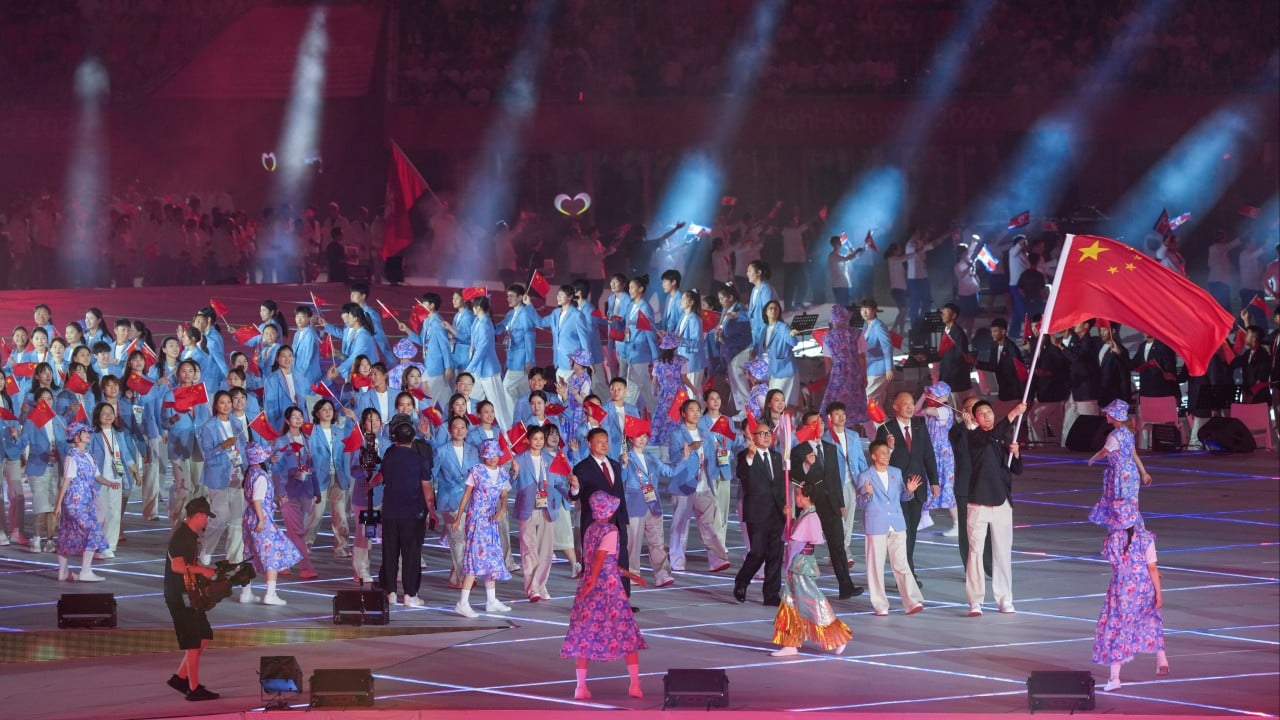
MANILA, Philippines — Team Philippines secured its most impressive overall medal tally in six decades at the 2026 Aichi-Nagoya Asian Games, finishing with 29 total medals consisting of four golds, nine silvers, and 16 bronzes.  This stands as the nation’s highest overall medal haul since capturing 42 medals at the 1966 Bangkok Games. Historically, the Philippines achieved its all-time best performances during the 1954 Manila Games with a 14-14-17 medal spread and the 1958 Tokyo Games with eight golds, 19 silvers, and 20 bronzes. Fielding a 447-athlete delegation—the country's largest representation since sending 524 competitors to the 1994 Hiroshima Games—the Philippine Olympic Committee (POC) and Philippine Sports Commission (PSC) aimed to break through the four-gold threshold. The national team matched its four-gold performances from both the 2018 Jakarta and 2022 Hangzhou Games. Addressing public criticisms over the outcome, PSC Chairman Patrick Gregorio clarified that the target of eight golds was set as an inspiring challenge rather than a firm performance guarantee.  He emphasized the value of the team's achievements, noting that silver finishes represent near-gold performances and urging observers to recognize the significant number of silver medals won. “That silver is also a gold; we were just unlucky. But the silver, if you compute it. And the thing that we’re talking about the eight golds. We should also count how many silvers we got,” Gregorio said. “Once a sportsman, always a sportsman. The bashing is part of the culture and social media; it does not only happen in the Philippines, but in the entire world,” he added.  The 2026 campaign featured several notable milestones alongside narrow misses. The nine silver medals collected in Aichi-Nagoya equaled the nation's silver medal record previously set at the 1970 Bangkok Games.  The delegation came closest to grabbing its fifth gold on the final day of competition on October 3, when Alexandria Luz Enriquez advanced to the finals of the women’s under-63 kilogram jiu-jitsu event, though she fell short against Thailand’s Orapa Senatham in a tightly contested bout. This achievement builds upon a long history of Asian Games participation. Following strong shows in the 1970s—including 22 medals in Bangkok 1970 and 14 apiece in Tehran 1974, Bangkok 1978, and Bangkok 1982—the Philippines recorded steady tallies across subsequent decades.  The country gathered 18 medals at New Delhi 1982, 10 at Seoul 1986, 13 at Beijing 1990, 18 at Hiroshima 1994, and 26 at both Bangkok 1998 and Busan 2002.  Leading into the current era, the nation captured 19 medals at Doha 2006, 16 at Guangzhou 2010, 15 at Incheon 2014, 21 at Jakarta 2018, and 18 at Hangzhou 2022 before reaching its 60-year high in 2026.

YOUR NEWS, OUR NETWORK.

Do you have Great News you want to tell the world?

Be it updates about your business or your community, you can make sure that it’s heard by submitting your story to our network reaching hundreds of news sites across 6 verticals.